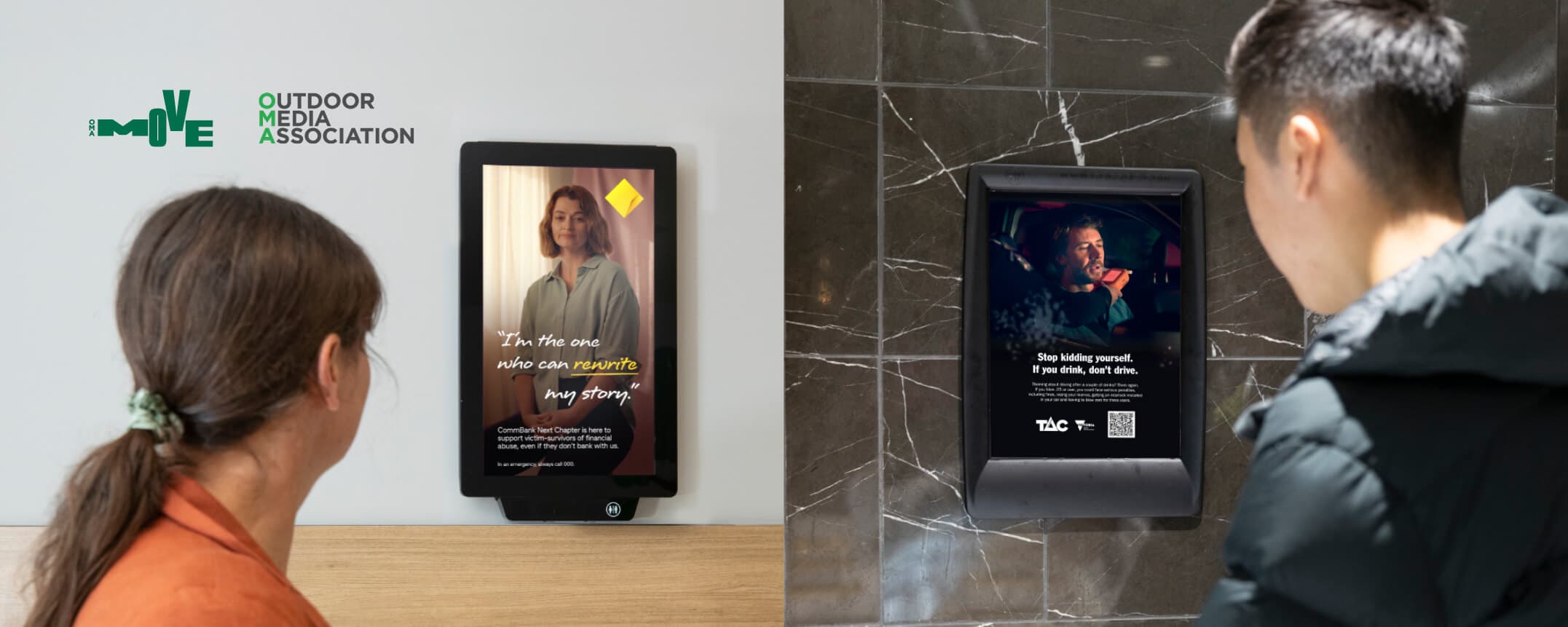
Convenience Advertising Joins OMA in Support of Australia's Independent Audience Measurement Framework
42-year Australian media company distinguishes independent audience measurement from the science of Attention
Read more

Australia’s winter period brings a predictable increase in respiratory illness, placing seasonal pressure on healthcare services, primary care providers and hospitals. Influenza remains a key contributor to this burden, alongside other respiratory viruses that circulate during colder months.
Public health campaigns have long played an important role in reducing risk through vaccination promotion, hygiene education and early intervention messaging, yet, despite broad public awareness of these issues, seasonal health system pressure persists.
This raises an important question for campaign planners: How can public health communication better support behaviour change, not just awareness?
According to the World Health Organization, influenza causes approximately 1 billion infections worldwide each year, including 3-5 million severe cases and up to 650,000 respiratory deaths annually [1].
In Australia, influenza is monitored through ongoing national surveillance due to its recurring impact on healthcare utilisation [2]. Respiratory surveillance reporting consistently shows increased activity during winter periods, contributing to higher demand across emergency departments and primary care services [3].
The National Preventive Health Strategy 2021-2030 highlights that investing in prevention reduces the overall burden of disease, delivering economic and social benefits in addition to health gains [4].
From a policy perspective, effective prevention messaging remains one of the most scalable interventions available.
Australia has experienced a dramatic resurgence in influenza over the past two years, with national case numbers reaching the highest levels recorded since surveillance began. The data highlights a rapidly escalating trend in seasonal influenza transmission (see Figure 1), driven by declining vaccination rates, increased population mobility and the re-establishment of seasonal respiratory virus cycles following the COVID-19 pandemic.
In 2025, influenza cases rose 37.8% to 502,905, up from 364,894 in 2024, including 1423 deaths [5, 6].
Figure 1. Annual Australian Laboratory Confirmed Flu Numbers

Understanding this surge is critical for policymakers, healthcare planners and public health campaign designers preparing for the 2026 winter season.
Annual influenza vaccination is recommended for all Australians aged six months and over, with particular emphasis on groups at greater risk of severe illness [7].
However, vaccination coverage data indicate that uptake remains below ideal levels and has declined in recent years.
Data from the National Centre for Immunisation Research and Surveillance (NCIRS) shows that between 2023 and 2024 [8]:
These trends suggest that while awareness campaigns are widespread, converting intention into action remains a challenge.
Public health communication is increasingly delivered through high-reach environments: digital platforms, broadcast media and traditional outdoor advertising.
These channels are essential for awareness building, but they also operate within environments characterised by:
Behavioural research consistently demonstrates that information processing improves when people experience lower cognitive load and reduced distraction.
For prevention campaigns, this distinction matters. Health messages often require individuals to pause, consider risk and make decisions that are not immediate or impulsive.
In other words, attention quality influences whether information is absorbed or ignored.
Health messaging is often more effective when delivered in environments that align with the behaviour being promoted.
For winter wellness campaigns, hygiene-focused environments represent one such context. Spaces associated with personal care and routine hygiene behaviours can create moments where individuals are more receptive to preventative health messaging.
Characteristics of these environments include:
These moments are less about exposure volume and more about engagement quality, creating opportunities for messages to be processed rather than simply seen. Public health outcomes are shaped not only by message content but also by delivery context.
International and Australian health bodies continue to emphasise prevention as a key strategy for reducing healthcare system pressure [1, 4]. As media environments evolve, there is increasing value in understanding how different settings influence attention and behaviour.
Layered communication approaches that combine broad reach with environments capable of supporting deeper engagement may improve the effectiveness of winter wellness campaigns aimed at increasing vaccination uptake, promoting hygiene behaviours, improving symptom awareness and encouraging early presentation to care. While mass media can build initial awareness, high-attention environments within everyday public settings provide an additional layer of engagement where messages can be absorbed with fewer competing distractions.
Convenience Advertising’s national venue network of bathroom environments provides a contextually relevant channel for public health messaging at moments when audiences are already engaged in hygiene-related behaviours. Unlike traditional media, where messages compete with multiple distractions, bathroom environments offer a low-distraction setting characterised by extended dwell time, minimal competing media and a natural pause in daily routines.
Located within high-footfall venues such as shopping centres, licensed venues and universities, these environments allow health communications to be absorbed with greater focus while coinciding with behavioural moments linked to handwashing and personal care. This contextual alignment supports preventative health campaigns, such as influenza awareness, by reinforcing the connection between individual actions and broader public health outcomes.


When used alongside broader program activity, these environments can support education and reflection to complement and amplify mass awareness channels.
Seasonal respiratory illness will continue to challenge health systems each winter. Strengthening preventative health communication remains a critical lever for reducing this burden.
As campaign strategies evolve, recognising the role of attention, context and environment may help bridge the gap between awareness and real-world behaviour change.